Randomness is the foundation of game mechanics, simulations, risk modeling, and cryptography. But “randomness” in digital systems doesn’t just happen; it’s created by algorithms that must be fast, unpredictable, and resilient to analysis. In programming, random number generators (RNGs) are used everywhere: from shuffle algorithms in games to the selection of random salts in password hashing.
However, not all RNGs are created equal. Some are suitable for calculating particle trajectories in simulations, others are only suitable for prototypes, and still others are the only viable option when high security requirements are involved. This article discusses how RNGs work, the differences between old- and new-generation algorithms, and why standard generators are insufficient for certain tasks.
Simplest RNG: Linear Congruential Generator
The linear congruential generator (LCG) is one of the oldest and most common pseudorandom generation algorithms. It is represented by the formula:
Xₙ₊₁ = (aXₙ + c) mod m
LCG is used in older C libraries (rand()), in some past game engines, and in early statistical packages. Its advantages are speed and minimal CPU load. However, LCGs have fundamental problems:
- Predictability: Knowing 2-3 consecutive values, an attacker can calculate the parameters a, c, and m and reconstruct the entire stream.
- Low entropy: The numbers exhibit structure, especially in multidimensional samples.
- Short cycles: Even with good parameter selection, the cycle length falls short of cryptographic requirements.
This is why LCG is only suitable for prototyping, visualization, and educational purposes, but not for systems where unpredictability is important.
Mersenne Twister and Modern PRNGs
In 1997, the Mersenne Twister algorithm (MT19937) was introduced—one of the most popular PRNGs of recent years. Its period length is 2¹⁹⁹³⁷ − 1, making the sequence extremely long and visually “random.” Why developers love MT19937:
- It’s fast and optimized for large arrays;
- Produces numbers with a uniform distribution;
- It’s well suited for games, simulations, and statistics.
However, MT19937 is not cryptographically secure. If an attacker sees 624 consecutive values, they can reconstruct the RNG’s internal state—this is a proven fact.
Therefore, the Mersenne Twister should not be used for security purposes (e.g., passwords, tokens, gambling, cryptography).
Why regular RNGs are unsuitable for gambling
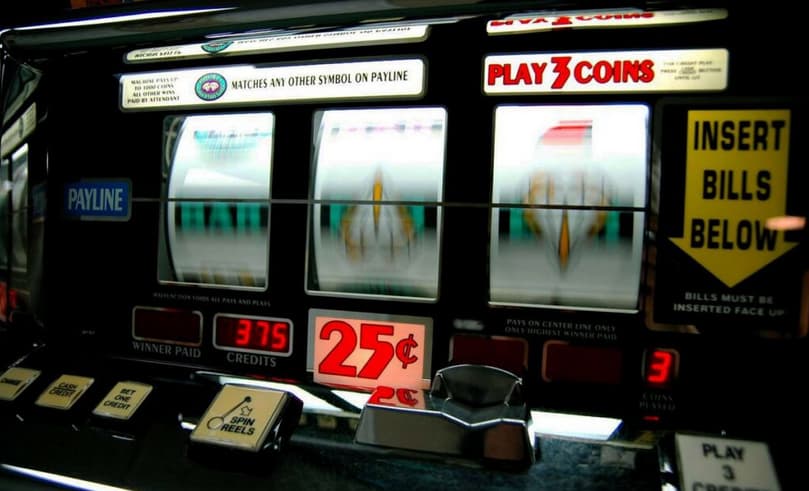
In the gambling industry, especially in Switzerland Online-Casino Echtgeld, RNGs are a critical security feature. Simple generators like LCG or MT19937 use predictable algorithms, and an attacker only needs to intercept a limited number of outputs to reconstruct the stream’s internal state. Therefore, gambling requires only cryptographic generators that are regularly certified by independent laboratories (e.g., iTech Labs, GLI, or eCOGRA). Certification reports test RNGs against several parameters:
- resistance to sequence analysis;
- absence of periodic patterns;
- unpredictability of the next value, even with knowledge of all previous values;
- correct integration of the RNG into the game engine.
This ensures fairness, without which the industry simply cannot function.

Cryptographically Secure RNGs: ChaCha20, AES-CTR DRBG, Hash-DRBG
Cryptographic RNGs are more complex. Their goal is not to “produce pleasant randomness,” but to make the result unpredictable. The most common options are:
- AES-CTR DRBG (NIST SP 800-90A). Generates random values based on the AES block cipher. Suitable for financial systems, tokens, and game servers.
- Hash-DRBG (SHA-256). Uses cryptographic hash functions. Very resistant to attacks on the internal state.
- ChaCha20-DRBG. Resilient, fast, and compatible with ARM systems and mobile devices. Used in OpenSSH, WireGuard, and several game servers.
Advantages of a crypto-resistant approach
- Absence of reversible dependencies;
- Protection even with partial observation of the sequence;
- Automatic state reseeding;
- The impossibility of mathematically reconstructing the internal state.
These RNGs are used in cryptocurrency wallets, WebAuthn, cloud services, and certified gaming systems.
Hardware RNGs: When Physical Entropy Matters
Reliable RNGs are often built not only on algorithms but also on physical phenomena. Hardware generators exploit thermal noise, clock jitter, quantum effects, and chaos in oscillatory circuits. For example, Intel RDRAND uses a hardware entropy source built into the processor. Quantum generators, available in some cloud services, produce even purer randomness (entropy close to 1 bit per bit). Hardware entropy is often used as a “seed” for cryptographic RNGs.
Randomness in the digital world doesn’t just happen; it’s created by algorithms. Simple generators are suitable for visualization or testing, but are useless where security is required. Cryptographically secure generators, hardware entropy sources, and strict certification are the foundation upon which secure services, financial systems, and certified gaming platforms are built.